
Manage Project Scopes
Managing project scopes in ProjectStream 365 allows project teams to organize, maintain, and control the individual work areas that make up a project. Project scopes provide the framework for estimating, budgeting, scheduling, resource planning, billing, and project reporting, ensuring that all project work is properly structured and tracked.
✅ Goal
Create, modify, and maintain project scopes that define the phases, disciplines, work packages, or deliverables associated with a project or proposal.
📍 When to Use
Manage project scopes when project requirements change, new work is added, existing work is revised, or the project structure needs to be updated.
Use project scopes to:
- Organize project work into logical sections
- Define work breakdown structures (WBS)
- Support estimating and budgeting activities
- Track project costs and billings by scope
- Improve project planning and reporting
- Assign responsibility for specific work areas
- Control project growth and scope changes
🚶➡️ Step-By-Step Guide
📋 Procedure
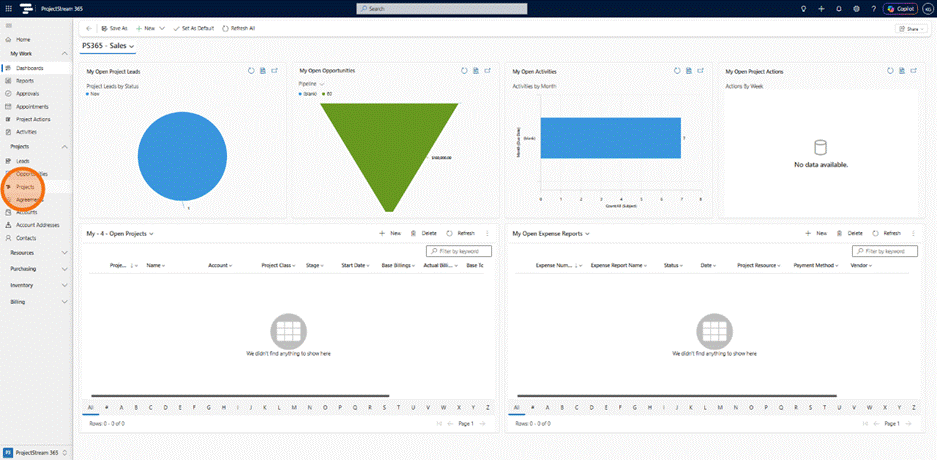
1. Navigate to Projects
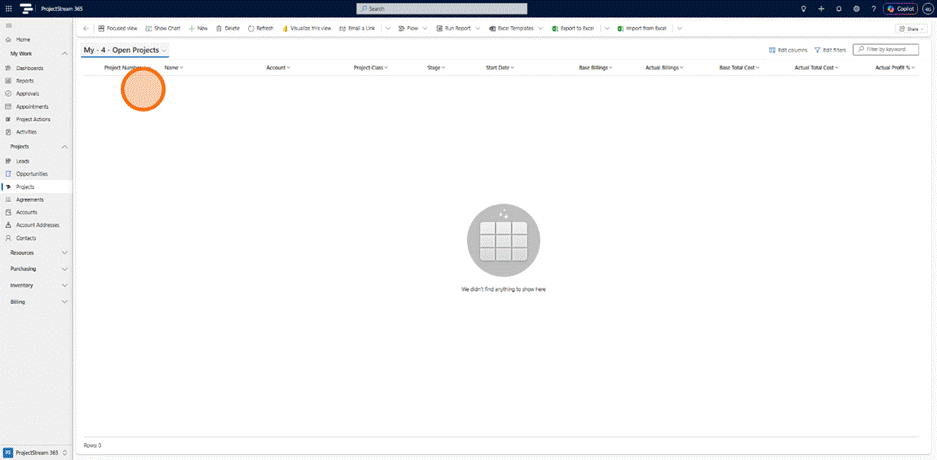
2. Open the view menu. Select Open Projects
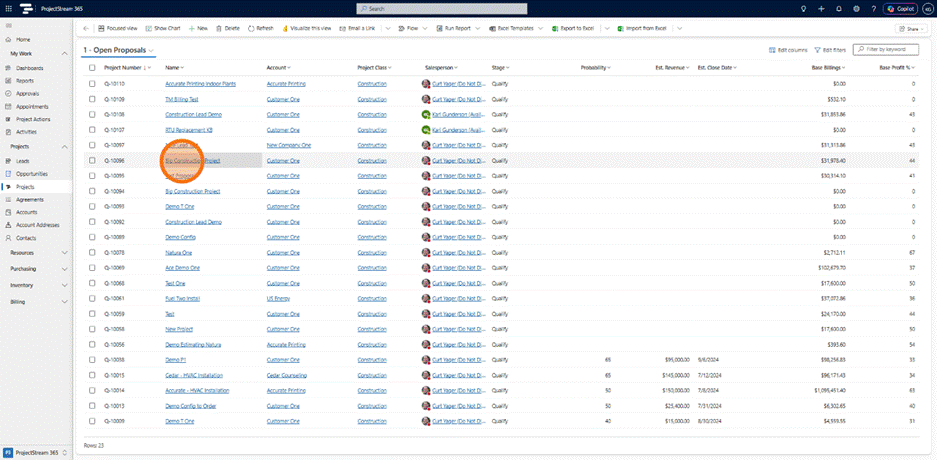
3. Select a Proposal
4. Select the Scopes Tab
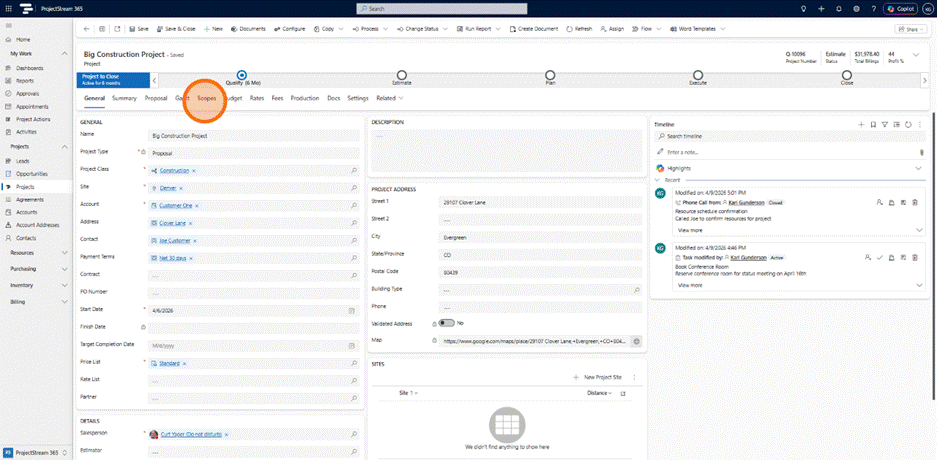
5. Open a scope to view / edit the details
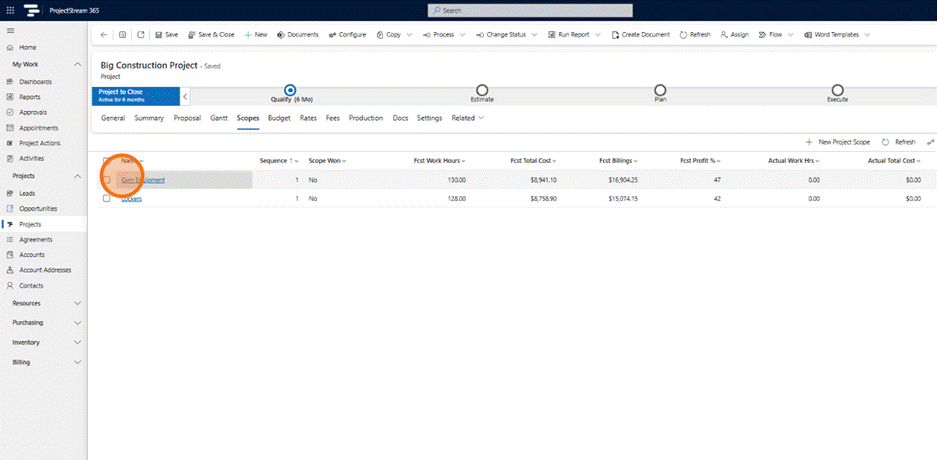
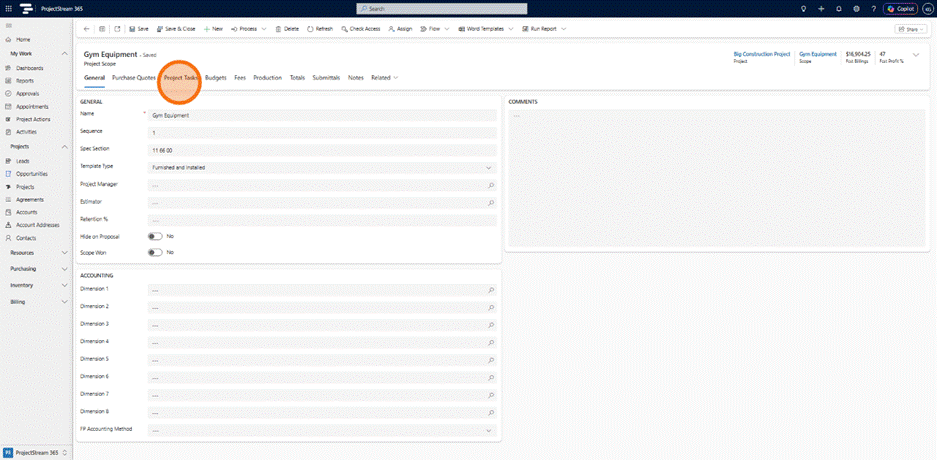
6. Select Project Tasks Tab to see the work tied to this scope.
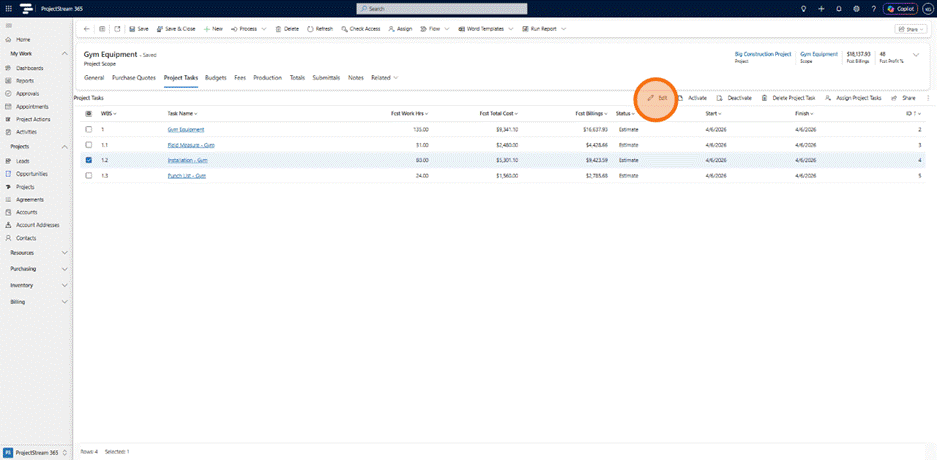
7. Select a Task and click Edit to modify the task details
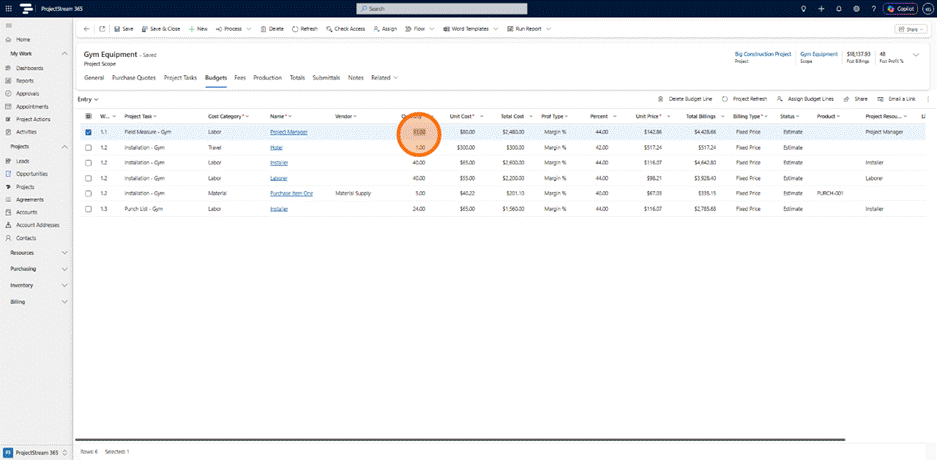
8. Click on the field to be edited and enter the changes
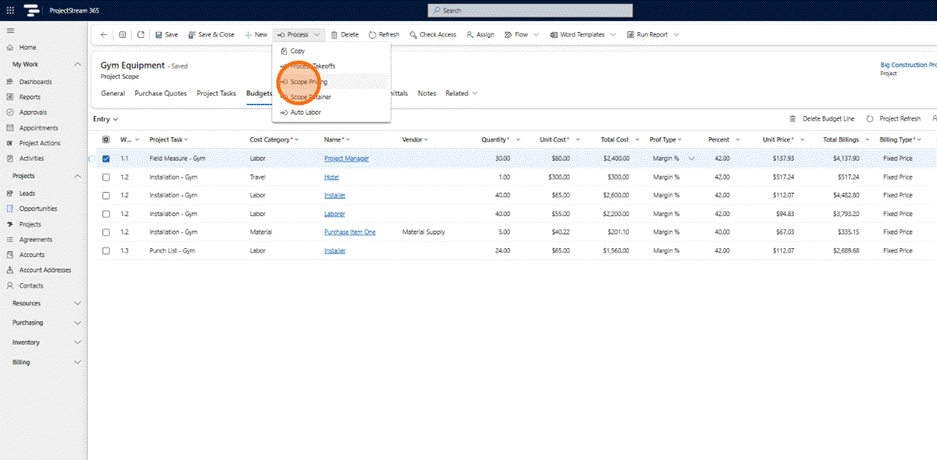
9. To make mass updates to categories click Process > Scope Pricing
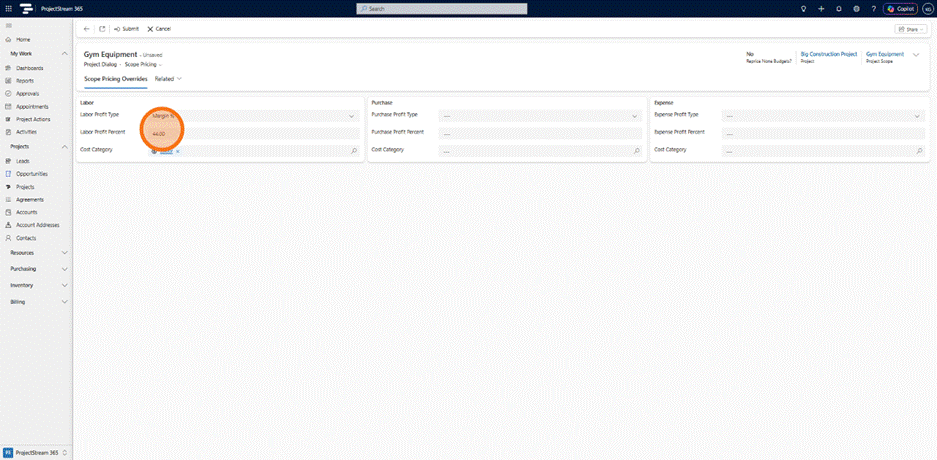
10. Enter the update details
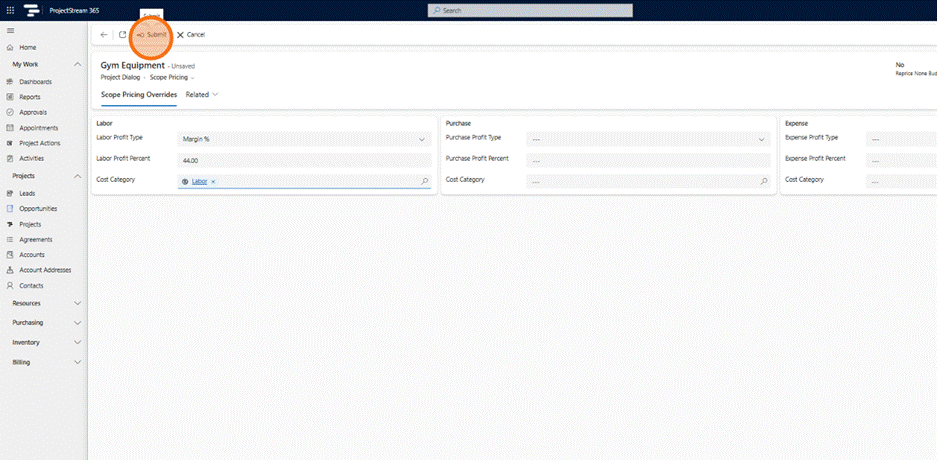
11. Click Submit
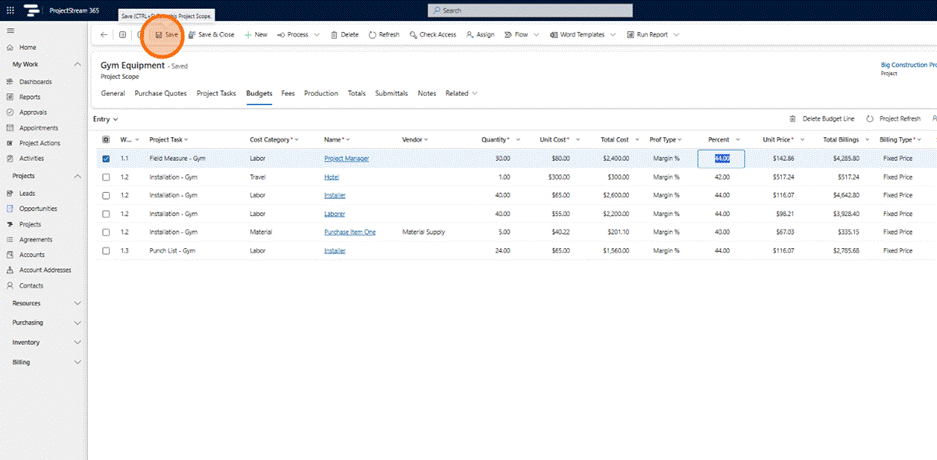
12. Click Save
✅ Result
After saving the scope changes:
- Project scopes are updated and organized.
- Project work is structured consistently.
- Budgets and estimates remain aligned with project work areas.
- Resource planning and scheduling can be managed more effectively.
- Scope-based reporting is available for project analysis.
- Project teams have a clear framework for delivering project work.
💡 Tips
- Use consistent naming conventions across all projects.
- Create scopes that reflect how work will be estimated, managed, and billed.
- Review scope structures before building budgets and estimates.
- Avoid duplicate scopes that could create reporting inconsistencies.
- Update project scopes whenever project requirements change.
- Keep scope definitions aligned with customer deliverables and contractual requirements.
🔗 Related Actions
- ➡ Enter a Project Proposal
- ➡ Configure Proposal from a Template
- ➡ Configure Project Scopes
- ➡ Enter / Edit Project Budgets
- ➡ Define Resource Rates
- ➡ Enter Project Fees
- ➡ Generate Project Reports
🧭 What Happens Next?
After project scopes have been updated, continue developing project estimates, budgets, schedules, and resource plans using the revised scope structure. The updated scopes become the foundation for ongoing cost tracking, billing, production management, and project performance reporting throughout the project lifecycle.