
Project Planning (Gantt)
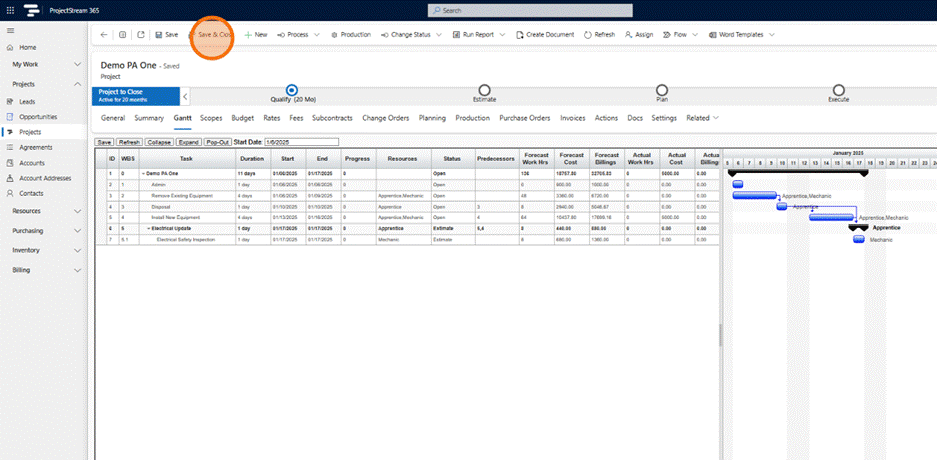
Project Planning in ProjectStream 365 uses the integrated Gantt Chart to organize the project work breakdown structure, schedule project tasks, assign resources, and establish task dependencies. The Gantt provides a visual planning workspace for developing and maintaining the project schedule while connecting planned work with project resources.
✅ Goal
Build and maintain a project plan using the ProjectStream 365 Gantt Chart to organize project tasks, define task durations and dependencies, assign resources, and adjust the schedule as project requirements change.
📍 When to Use
Use Project Planning (Gantt) when establishing a project's work breakdown structure and resource assignments or when the project schedule needs to be updated.
Use the Gantt Chart to:
- Add project tasks.
- Define task durations and dates.
- Assign one or more resources to tasks.
- Create dependencies between tasks.
- Indent and outdent tasks to organize the project structure.
- Expand and collapse parent tasks.
- Reschedule the project based on a new Project Start Date.
- Review forecast and actual task totals.
- Open the Gantt Chart in full-screen mode.
🚶➡️ Step-By-Step Guide
📋 Procedure
- Navigate to Projects
-
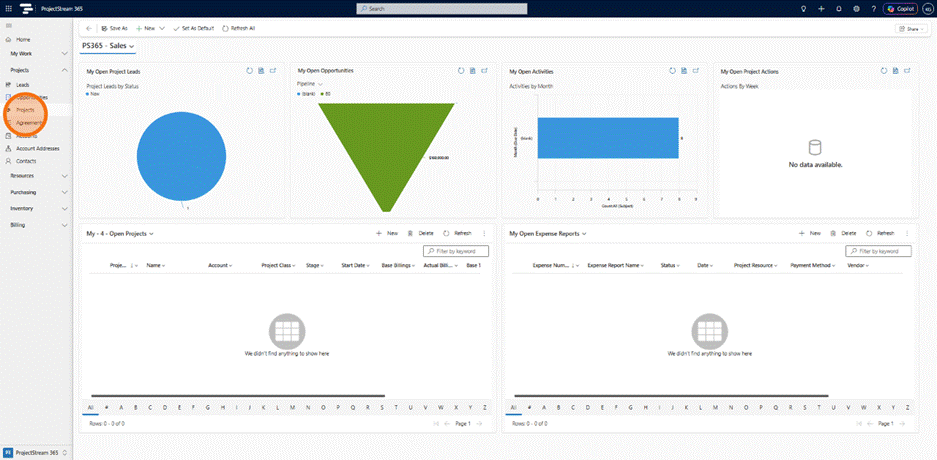
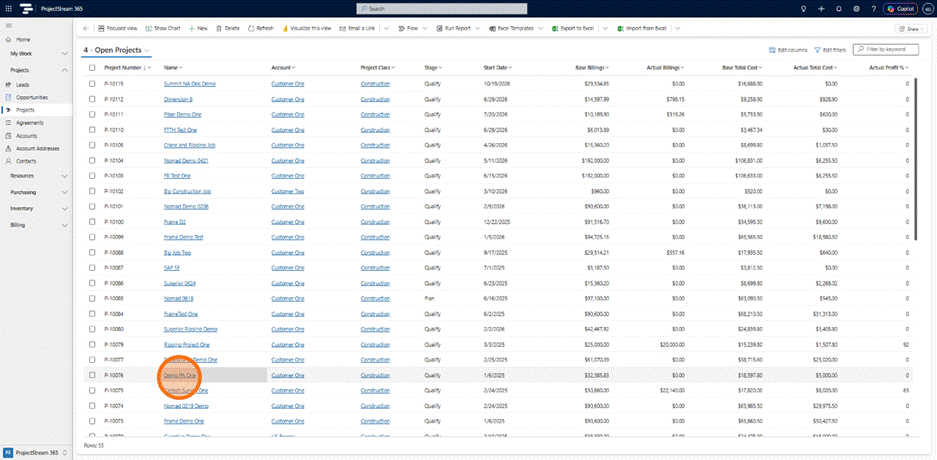
2. Select an Open Project
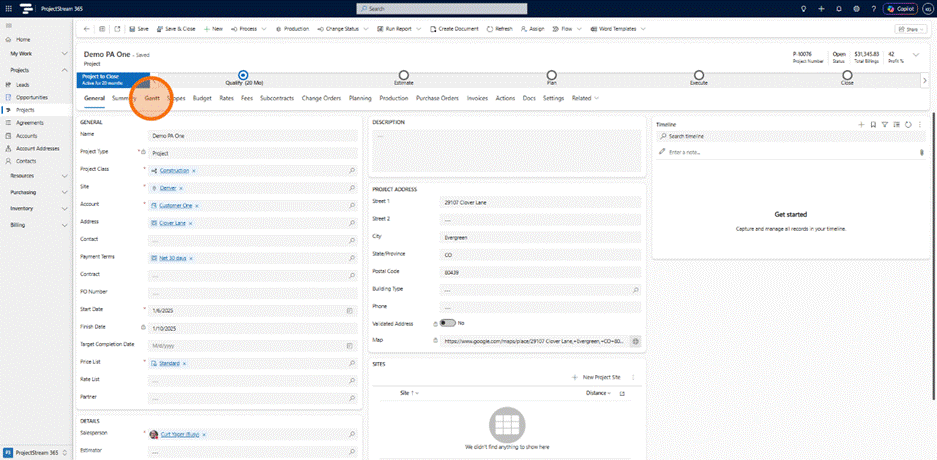
3. Select the Gantt Tab
4. Select Add Task
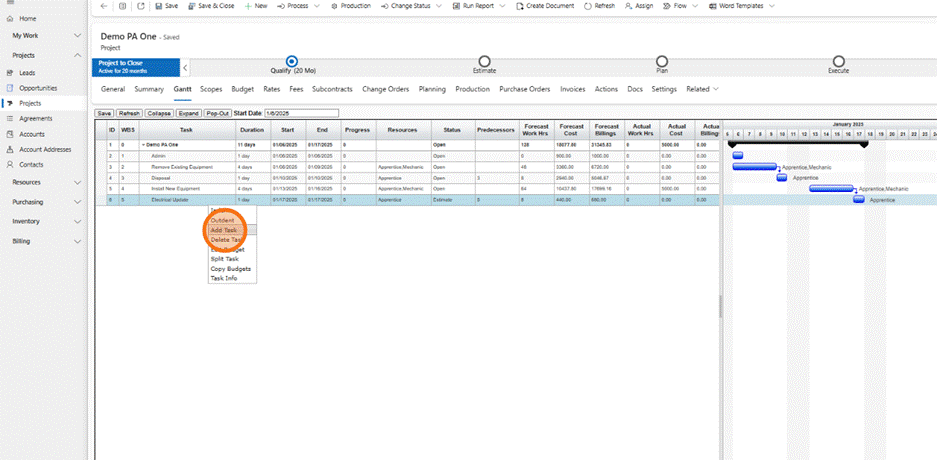
5. Enter the new task name
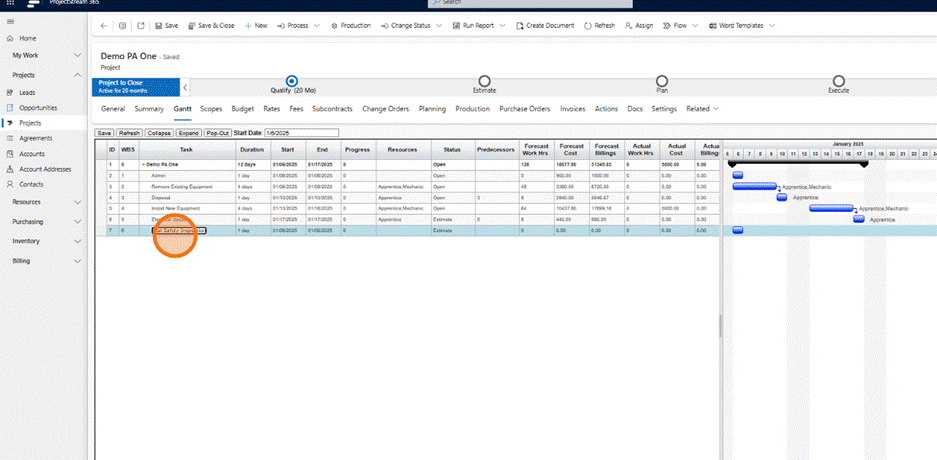
6. Click in the grid cells and enter the Duration and Start Date
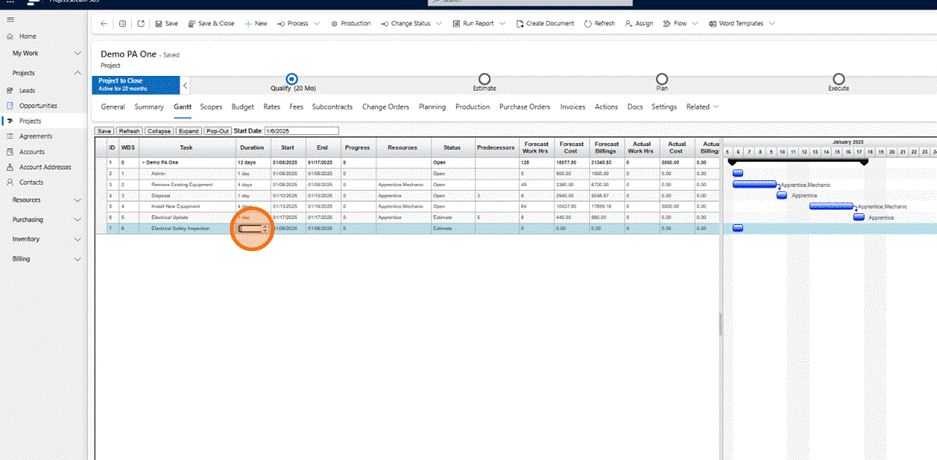
7. Select a Resource
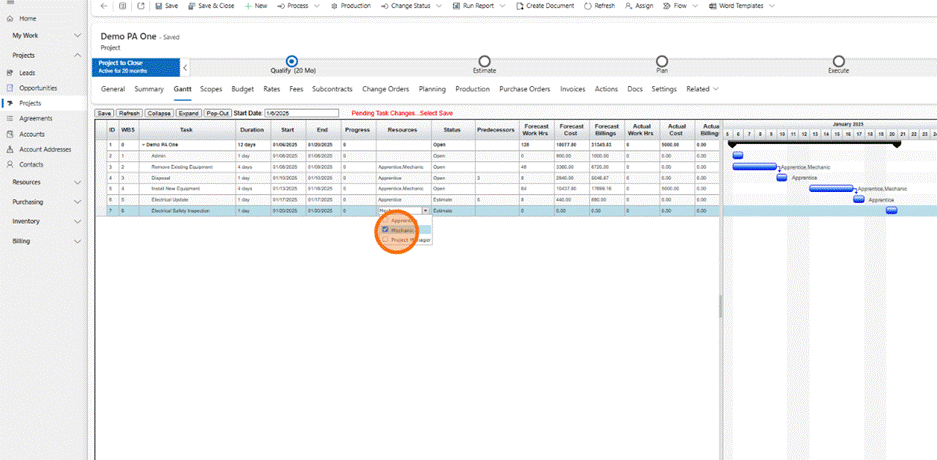
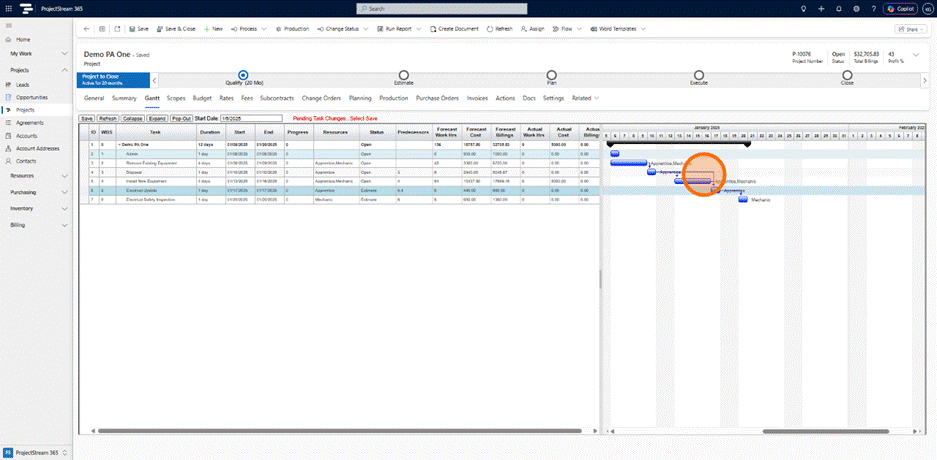
8. Enter Line ID numbers in the Predecessors field to create task dependencies
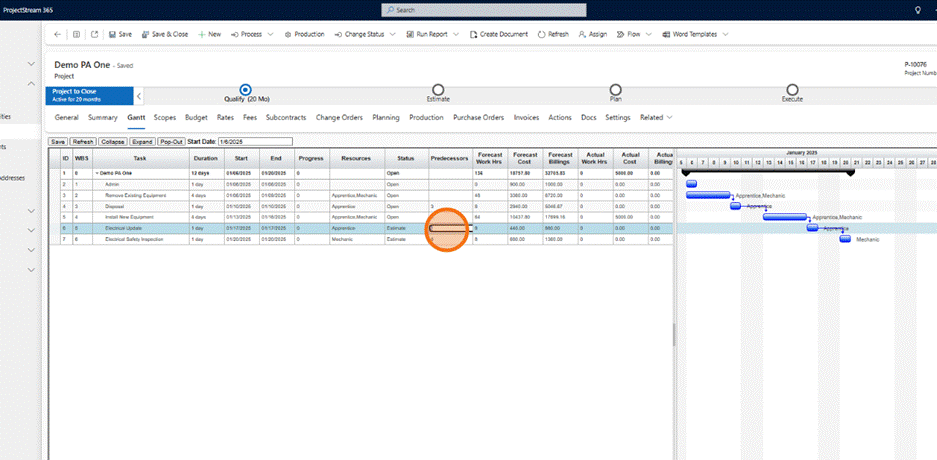
9. Or: Drag and drop connector arrows to create task dependencies
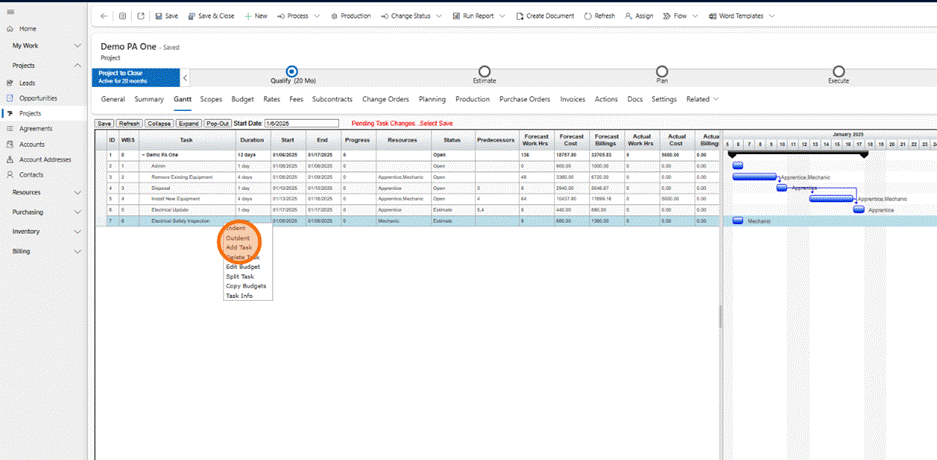
10. Right Click on a task line and use Indent or Outdent functions to create Parent/Child relationships between tasks
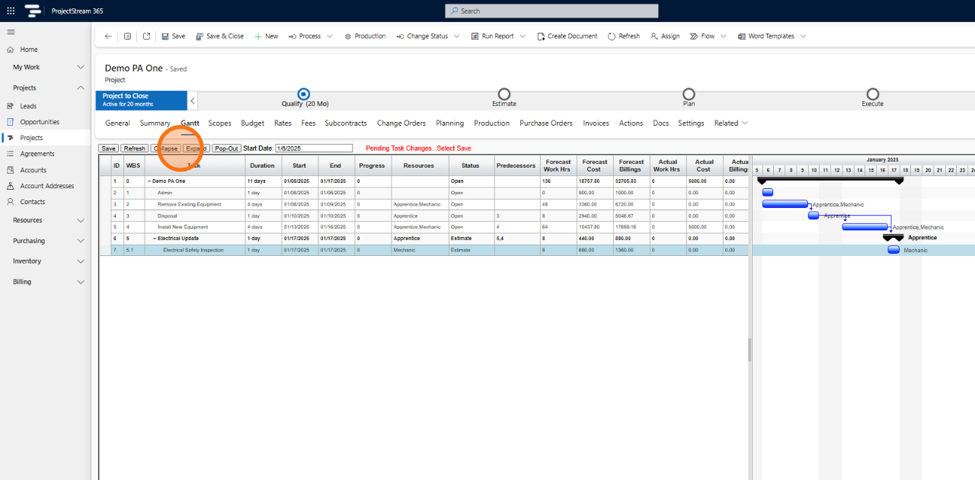
11. Use Expand or Collapse buttons to show or hide parent/child tasks
12. Click Save
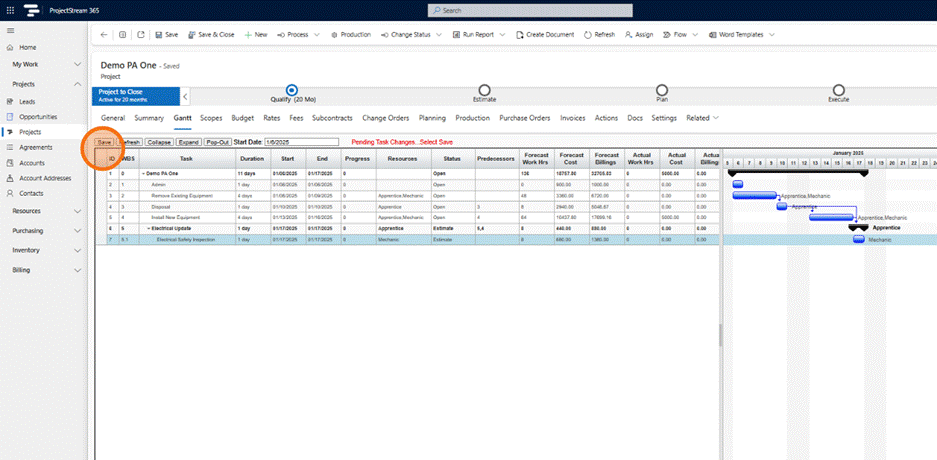
13. Click Save & Close
✅ Result
After completing project planning:
- Project tasks are organized within the Gantt Chart.
- Task durations and planned dates define the project schedule.
- Resources can be associated with the work they are assigned to perform.
- Labor budgets are automatically created when resources are assigned to tasks.
- Dependencies establish relationships between project tasks.
- Parent and child tasks provide structure to the project plan.
- Forecast and Actual values are available for review in the Gantt totals view.
💡 Tips
- Build the task structure first so the Gantt reflects a logical work breakdown before detailed resource planning.
- Use Indent and Outdent to keep related work organized beneath appropriate parent tasks. ProjectStream 365 provides these commands specifically for structuring tasks.
- Establish task dependencies before changing the overall Project Start Date so dependent tasks can be automatically rescheduled.
- Remember that assigning resources affects more than the schedule. ProjectStream 365 automatically creates a labor budget for each resource assigned to a task.
- Use the Forecast and Actual totals when reviewing the project plan to provide additional visibility into planned versus recorded project information.
- Use Pop Out when working with a larger or more detailed schedule that benefits from the full-screen Gantt view.
🔗 Related Actions
- ➡ Maintain Project Resources
- ➡ Enter / Edit Project Budgets
- ➡ Manage Project Scopes
- ➡ Manage Project Production
🧭 What Happens Next?
After the initial project plan is established, continue maintaining task dates, dependencies, and resource assignments as the project evolves. Changes to the Project Start Date can be used to reschedule dependent tasks, while Forecast and Actual values in the Gantt provide information for ongoing review of the project plan.